How to Respond to a Wedding Invitation by Text
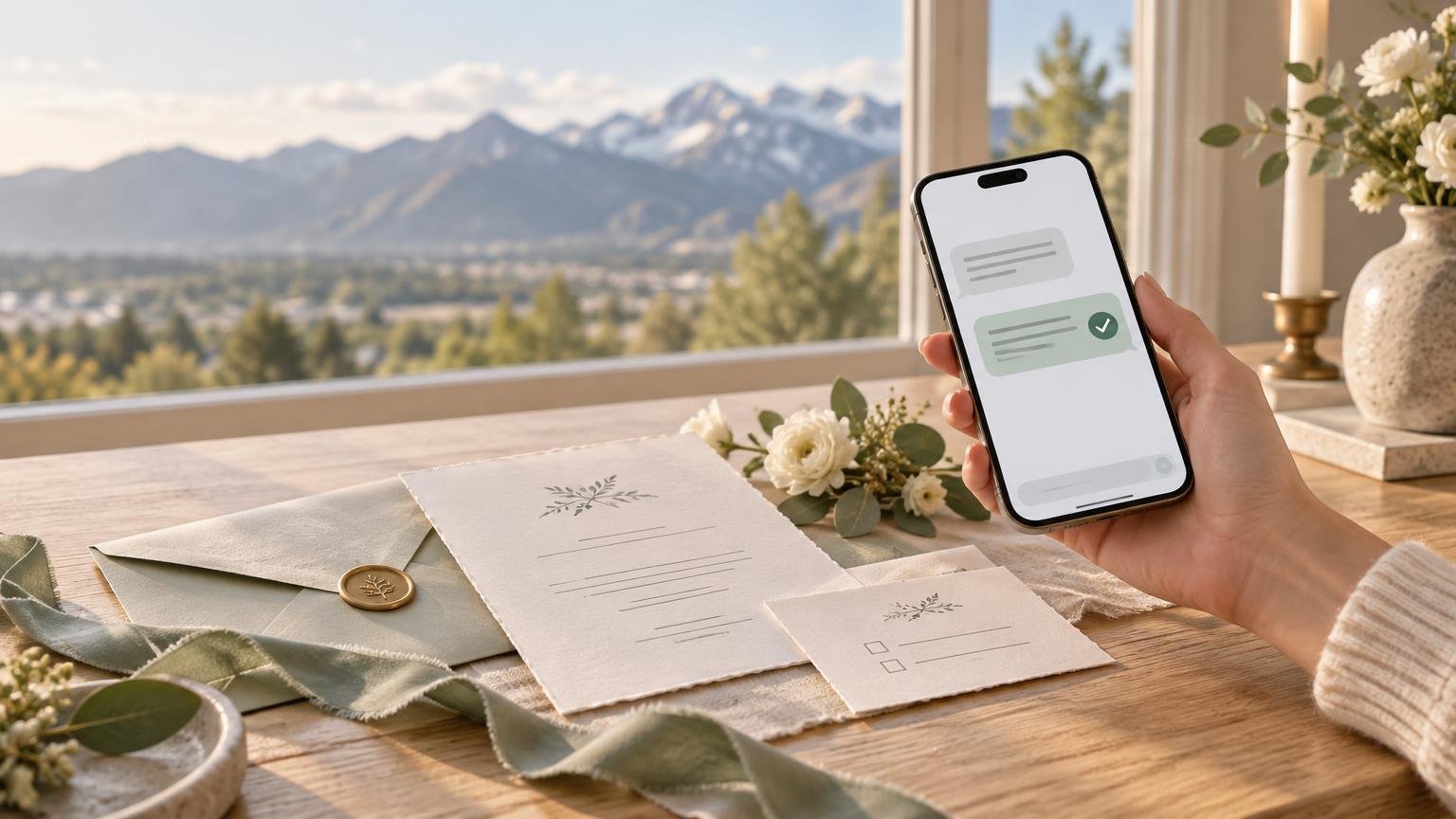
You can respond to a wedding invitation by text when the couple asks guests to text, provides a phone number for replies, or sends the invitation itself by text. Keep your message warm but unambiguous: identify yourself, say whether you accept or decline, name every invited person attending, and include any requested meal or event choices.
If the invitation provides a response card, wedding website, QR code, email address, or another designated method, use that channel instead. A friendly text to the couple does not necessarily enter your information into the guest list they are using for catering, seating, and related events.
First, check how the couple asked you to RSVP
The reply instructions on the invitation should govern your response. According to Emily Post’s invitation etiquette guidance, guests should return an enclosed response card when one is provided, while a listed phone number or email address authorizes that form of reply. Guests should respond promptly and no later than the stated deadline. Unless the invitation says “regrets only,” declining guests should respond too.
Texting is therefore appropriate in a few clear situations:
- The invitation says to call or text a named person or phone number.
- The invitation was sent by text and requests a reply in the same conversation.
- The couple personally tells you that a text response is acceptable.
- The event is casual and the host is intentionally collecting replies by text.
Texting is not the safest primary response when the invitation directs you to mail a card, visit an RSVP website, scan a QR code, or email a particular address. Complete that step even if you have already mentioned your plans in a conversation with the couple. Centralized responses make it easier for the hosts to record attendance, meal selections, dietary information, and participation in other wedding events.
This distinction matters for Utah celebrations that divide the day among a ceremony, wedding breakfast or luncheon, reception, and open house. An invitation may include you in one part of the celebration without including you in every event. Respond only to the events shown on your invitation, and do not assume that a casual conversation expanded the invitation.
What to include in a wedding RSVP text
An effective text gives the couple a complete answer they can record without starting another conversation to collect missing details. Include the following information when it applies:
- Your full name, especially if you are texting a wedding-party member, parent, or RSVP coordinator who may not have your number saved.
- A direct acceptance or decline.
- The full names of all invited members of your household who will attend.
- The total number attending, if the couple requested a count.
- Your meal selection and the selections for other attending guests, if requested.
- Dietary information the couple specifically asked guests to provide.
- Your answer for each additional event listed on the invitation.
- A short congratulatory note, if you would like to add one.
The wedding RSVP guidance from The Knot likewise recommends making the answer clear and including the names and number of attendees. It also emphasizes that guests should not add children, relatives, or a plus-one who was not included in the invitation.
Read the invitation’s names and wording carefully before replying. If it is addressed to “Jordan Lee,” the invitation is for Jordan alone unless another guest is explicitly included. If it names “Jordan Lee and guest,” Jordan may respond for two people and should provide the guest’s name once known. If it names several members of a family, identify exactly which of those invited people will attend.
If you are uncertain who is invited, ask before sending your final RSVP. A brief clarification is better than arriving with an uninvited guest or forcing the couple to correct an assumption after they receive your response. For more context, the names written on the envelope are an important part of how wedding invitations communicate who is invited.
Text examples you can copy and adapt
The tone does not need to match the formality of engraved stationery. It does need to be clear. Start with one of these examples and add any information requested on the invitation.
Accepting for one guest
Hi, Maya! This is Olivia Chen. I’m delighted to accept the invitation to your wedding on June 14. I’ll be attending, and my meal choice is the chicken. Thank you—I’m looking forward to celebrating with you both!
Accepting for a couple or household
Hi, Daniel. This is Priya Shah responding for the Shah household. Priya and Aaron will both attend the ceremony and reception on September 6. Our meal choices are one beef and one vegetarian. We’re so excited to celebrate with you and Lena!
Accepting one event and declining another
Hi, Emma! Noah Williams here. I’ll be happy to attend the reception on August 22, but I won’t be able to join the Friday dinner. Thank you for including me—I’m looking forward to celebrating with you.
This type of answer is useful when a wedding weekend has separate activities. Name each event rather than writing only “I’ll be there,” which can leave the hosts unsure about the dinner, ceremony, reception, or open house you mean.
Declining the invitation
Hi, Carlos. This is Megan Foster. Thank you so much for inviting me to your wedding. Unfortunately, I won’t be able to attend, but I’m sending my congratulations and best wishes to you both.
You do not owe the couple a detailed explanation for declining. “Unfortunately, I won’t be able to attend” is complete, polite, and easy to record. If you are close to the couple and want to explain privately, you can do so, but the RSVP itself should not turn into an elaborate apology.
Responding for only part of an invited household
Hi, Rachel. This is David Kim responding for the Kim family. David and June will attend the reception, but Mia and Owen will not be able to join us. That will be two guests attending. Thank you—we’re looking forward to it!
Naming both the attending and nonattending invitees prevents confusion, particularly when an invitation includes several family members. The couple can record the correct count without guessing whether omitted names were accidental.
When you still need to use the official RSVP channel
A text is not a substitute for the requested response method just because it reaches the couple quickly. If the invitation includes a card and reply envelope, mail the card. If it points to a website or QR code, submit the online form. If it asks you to email an RSVP coordinator, send the email.
The official channel may collect details that a casual text misses. It may ask which invited guests are attending, whether you need transportation, which entrée you prefer, whether you will attend a temple exit or separate reception, or whether the hosts should note a dietary restriction. Finishing the form is more helpful than making the couple transfer every detail from a text conversation.
For hosts, the response method should be visible and consistent across the suite. Couples who are still preparing printed wedding invitations and response pieces should make the deadline and reply instructions easy to find, then avoid presenting several competing methods unless someone is responsible for consolidating them.
A mailed card also deserves the practical details that make it easy for guests to use. If you are planning your own stationery, see the guidance on whether to put a stamp on the wedding RSVP envelope. Digital and hybrid systems can work well, but each invited household should be able to tell exactly what action completes its RSVP.
When a follow-up text is helpful
A text can be a courteous backup when you completed the official method but have a reasonable concern that your answer may not reach the hosts in time. For example, if you mailed a response card close to the deadline, you can tell the designated contact that the card is on its way and provide the essential answer. The text supports the official response rather than replacing it.
You might write: “Hi, Lauren—this is Alex Morgan. I mailed our response card today, but because the deadline is close, I wanted to let you know that Alex and Sam will both attend. Our meal selections are one salmon and one vegetarian.”
A follow-up is also reasonable if the RSVP website produced an error or you are unsure whether an online submission went through. Mention the problem and ask whether the couple or coordinator received your response. Do not submit several conflicting replies through different channels; make the final answer explicit.
Reply promptly rather than sending a maybe
Respond as soon as you can give a reliable answer. A day or two is considerate when your plans are already settled, but the stated deadline is the firm limit. If you need to check work, travel, childcare, or another commitment, do that promptly rather than leaving the hosts with an indefinite “maybe.”
When you genuinely cannot confirm by the deadline, contact the named RSVP person before it passes. Explain briefly that you are waiting on a specific answer and ask whether a short extension is workable. The couple may say yes, but they may also need a final count for the venue or caterer. If continued uncertainty would hold up a formal event, declining can be more considerate than reserving a place you may not use.
Do not treat silence as a decline. The hosts may wonder whether the invitation arrived, whether the RSVP was lost, or whether you overlooked the deadline. A direct no is kinder and more useful than no answer.
What to do if your plans change after you accept
If illness, an emergency, or another serious change prevents you from attending after you accepted, contact the couple or designated RSVP person immediately. Do not wait until the wedding day if you already know you cannot attend. The hosts may need to adjust seating and catering or may be able to offer the place to another guest.
Use a direct message such as: “Hi, Ben. I’m very sorry, but an unexpected medical issue means I can no longer attend the wedding on Saturday. I wanted to tell you as soon as possible so you can update the count. I’m disappointed to miss it and am sending you both my best wishes.”
If you previously declined and later become available, do not announce that you are coming. Ask whether the couple can still accommodate you and graciously accept either answer. Their final numbers, seating plan, and event capacity may already be settled.
The best text RSVP is complete, clear, and expected
Before pressing send, confirm three things: texting is an approved response method, your answer clearly says yes or no, and you have included every requested detail for only the people named on the invitation. If the couple provided an official RSVP card or digital system, complete it even if you also send a friendly message.
Wedding RSVP etiquette is less about sounding formal than making the hosts’ job easier. A prompt, definite response—delivered through the method they requested—is the most considerate answer you can give.
Frequently Asked Questions
Can I RSVP to a wedding by text?
Yes, if the invitation provides a phone number, asks for a text reply, was sent by text with that expectation, or the couple directly approves texting. Otherwise, use the response method printed on the invitation.
What should a wedding RSVP text include?
Identify yourself, clearly accept or decline, and name every invited person who will attend. Include the guest count, meal selections, dietary information, and answers for additional events when requested.
Does texting the couple count if the invitation has an RSVP card or website?
Not by itself. Complete the designated card, website, QR-code form, or email process so your information enters the couple’s official guest list.
How do I decline a wedding invitation by text?
Thank the couple, state directly that you cannot attend, and offer a brief warm wish. You do not need to provide a detailed explanation, but you should still respond unless the invitation specifically says “regrets only.”
How should I respond if I am invited to some wedding events but not others?
Answer separately for each event listed on your invitation. Name the ceremony, luncheon, reception, open house, or other activity rather than sending an unclear “I’ll be there.”
What should I do if my plans change after I accept?
Contact the couple or designated RSVP person immediately and clearly explain that you can no longer attend. Prompt notice may help the hosts adjust seating or catering.