Do Wax Seals Require Extra Postage?
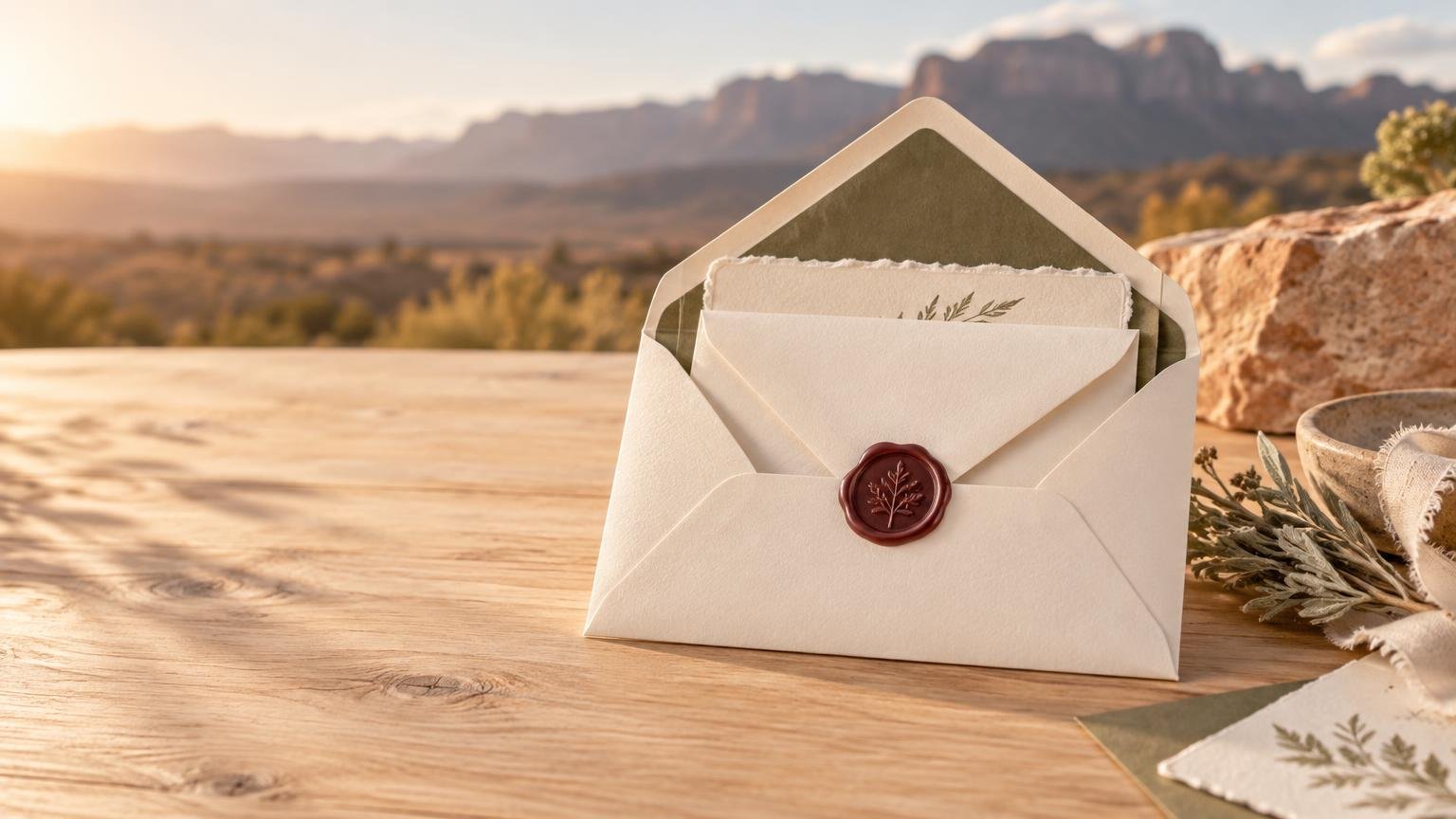
Yes. An exposed wax seal generally requires extra postage because USPS identifies a wax seal used as a closure device as a nonmachinable characteristic. That means a letter with a wax seal is subject to the nonmachinable surcharge, even if the envelope otherwise falls within standard letter dimensions.
The safest approach is to assemble one invitation exactly as a guest will receive it—including every card, liner, envelope and seal—then take that sample to a Post Office counter. Weight is only part of the decision. USPS also evaluates the finished piece’s dimensions, thickness, flexibility, shape and exterior features.
Why a wax seal changes the postage
Postal equipment is designed to move relatively flat, flexible and consistently shaped letters. A raised wax seal creates an exterior obstruction and may also produce uneven thickness. USPS treats wax seals as nonmachinable closure devices, while its broader standards identify excessive rigidity and uneven thickness as additional reasons a letter may be nonmachinable.
Nonmachinable does not necessarily mean unmailable. It means the piece cannot receive ordinary machinable-letter pricing. You generally pay the regular postage based on weight plus the applicable nonmachinable surcharge, provided the mailpiece still qualifies as a letter.
Under USPS Notice 123 effective October 4, 2026, a one-ounce stamped First-Class Mail letter costs $0.82 and the nonmachinable surcharge is $0.49. That produces a starting total of $1.31 before any additional-ounce charges. Because postal prices change, confirm the current amount before purchasing stamps for the full mailing.
A small or carefully placed seal is not automatically exempt
Putting the seal in the center of the flap, making it small or choosing a thin design may reduce snagging or breakage, but USPS standards do not provide a placement-based exception for an exposed wax seal. The completed envelope is what matters.
In other words, do not assume that a neat flap-mounted seal qualifies for ordinary machinable postage. Placement can improve the appearance and balance of the envelope, but it does not erase the published nonmachinable characteristic.
Check the entire invitation’s thickness and construction
A letter-size mailpiece must be rectangular, between 5 and 11½ inches long, between 3½ and 6⅛ inches high, no more than ¼ inch thick and no more than 3.5 ounces. A piece outside those limits may move into flat or parcel pricing depending on its dimensions and construction. USPS retail mail standards
The seal is therefore not the only concern. Heavy paper, stacked enclosure cards, a lined envelope, ribbon or a bulky fold can change the final classification. A suite may remain under the weight limit yet still be nonmachinable because it is rigid or uneven.
- Assemble the invitation card, details card, RSVP materials and every other insert.
- Include the envelope liner, inner envelope and outer envelope if you plan to use them.
- Apply the real wax seal rather than estimating its thickness from an unfinished envelope.
- Address the sample in the same orientation planned for the mailing.
- Take the completed sample to a Post Office counter for classification and weighing.
For a landscape envelope, keep the delivery address parallel to the longer edge. An address parallel to the shorter dimension is itself a nonmachinable characteristic, separate from the wax seal. You can also review how to address wedding invitations correctly before preparing the final envelopes.
An outer envelope offers better protection
USPS advises customers not to send wax seals, ribbons or strings exposed on invitation envelopes. Its recommended protective method is to place the decorated invitation envelope inside another envelope. USPS guidance for sending letters and embellished invitations
With this approach, the wax seal closes the inner envelope and a plain outer envelope becomes the mailed piece. The outer envelope protects the decoration from direct contact with postal equipment and other mail.
If you are still choosing cards, paper and envelopes through printinvitations.com, decide whether the suite will use an inner and outer envelope before approving the final dimensions. That decision affects envelope sizing, assembly, total weight and the amount of room available around the sealed inner envelope.
Ask about hand canceling, but still pay the correct postage
USPS says customers mailing embellished invitations may pay the nonmachinable fee, bring the pieces to a Post Office counter and ask a retail associate to hand-cancel them. Hand canceling refers to how the postage is canceled; it should not be treated as a substitute for the required postage or as a placement exception for the seal.
Bring the invitations to the counter rather than dropping them into a collection box. Ask the associate to confirm the mail classification, total postage and available handling options for that location. Do this before buying decorative stamps for the whole guest list, since weight and classification can change the total.
Verify before sealing the full batch
The practical answer is simple: budget for a nonmachinable surcharge when mailing an exposed wax seal, then verify the actual assembled invitation. If you want better protection, use the wax seal on an inner envelope and mail it inside a plain outer envelope—but have that finished outer piece checked too.
Complete the sample early enough to adjust the design, order different envelopes or purchase the right postage without delaying your mailing date. Our wedding invitation and announcement timing guide can help you leave room for printing, assembly and this postal check. If postage is affecting the broader stationery budget, review these ways to save money on wedding invitations without making them look cheap.
Frequently Asked Questions
Does an exposed wax seal require extra postage?
Generally, yes. USPS identifies a wax seal used as a closure device as a nonmachinable characteristic, so the letter is subject to the nonmachinable surcharge.
Can a small or centered wax seal avoid the surcharge?
No placement-based exception is published for a small, centered or flap-mounted exposed seal. USPS evaluates the completed mailpiece.
Does using an outer envelope guarantee standard postage?
No. An outer envelope protects the wax seal, but the finished outer mailpiece must still meet USPS requirements for size, weight, thickness, flexibility and construction.
How thick and heavy can a letter-size invitation be?
A letter-size mailpiece can be no more than ¼ inch thick and 3.5 ounces. It must also satisfy USPS shape and dimension limits.
Does hand canceling replace the nonmachinable surcharge?
No. USPS says customers may pay the nonmachinable fee and then ask a retail associate to hand-cancel embellished invitations.
What should I take to USPS for postage verification?
Bring one fully assembled sample with every card, liner, envelope, seal and embellishment included. Ask the counter associate to confirm its classification, weight and total postage.